Signed in as:
filler@godaddy.com
First responders face what most people will never encounter — critical incidents, trauma, violence, death, moral injury, burnout, and the cumulative weight of carrying others through their worst moments. These experiences leave marks that are often invisible, but always real.
Protect the Protector exists to acknowledge that reality and address the human cost of service. Our mission is simple: Protect those who protect others through training and education.
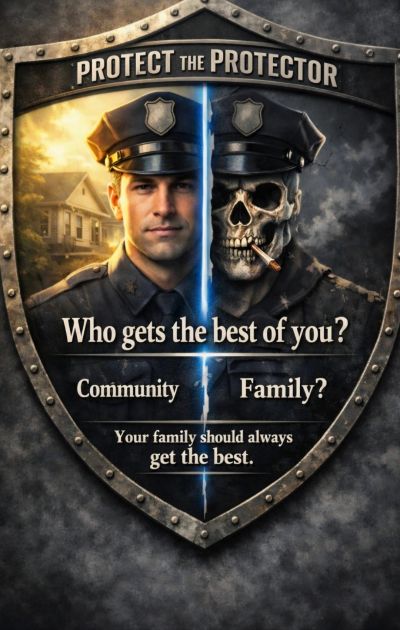
The Protect the Protector shield asks a simple but powerful question:
Who gets the best of you?
Like Dr. Jekyll and Mr. Hyde, the shield represents two realities that often exist within the same individual.
At Protect the Protector, we believe those who dedicate their lives to protecting others should not sacrifice themselves or the people they love in the process. Our mission is to help first responders remain healthy, resilient, and present, so the people who matter most receive the best version of them.
Because the community may see the protector, but your family deserves the person behind the protector.
· We are committed to promoting the wellness, resilience, recovery, and humanity of the men and women behind the badge, the turnout gear, the medic bag, and the tactical vest. Through education, training, honest conversations, leadership, and meaningful resources, we challenge the culture of silence surrounding mental and emotional well‑being in the first‑responder community.
· We believe asking for help is not weakness, seeking support is not failure, and vulnerability does not diminish strength.
· We recognize the invisible burdens that accompany a life of service — sleepless nights, difficult memories, moral conflict, organizational challenges, strained relationships, burnout, and the gradual loss of purpose that can occur when people spend their lives caring for everyone else.
· We will not ignore those realities. We will not minimize the cost of service. And we will not forget the person behind the protector.
Protect the Protector stands for a culture where first responders are equipped not only to face danger, but also to care for themselves, support one another, and find a path toward healing and lasting resilience.
Because protecting others should never require losing yourself.

Just because you can function doesn’t mean you aren’t hurting.” First responders carry weight the public never sees. Some of it comes from the job. Some of it comes from the culture. Some of it comes from the expectation that we should be fine — even when we’re not. These aren’t weaknesses. They’re realities. Naming them is the first step toward protecting the people who protect everyone else.
• Critical incidents — The moments that change how we see the world, even when we don’t talk about them.
• Trauma — Not always the big event; often the accumulation of small wounds over years.
• Burnout — When the job keeps taking and the system doesn’t give back. Burnout isn’t weakness — it’s depletion.
• Compassion fatigue — Caring until you’re empty, then being expected to care more.
• Moral injury — When what you had to do, or what was done to you, violates your sense of right.
• Grief and loss — The losses we acknowledge and the ones we bury.
• Exposure to violence — Seeing what most people never see and seeing it repeatedly.
• Death and dying — Carrying the final moments of strangers long after the call ends.
• Betrayal — When the institution you serve doesn’t serve you back.
• Organizational trauma — Harm caused not by the street, but by the system.
• Relationship strain — The job doesn’t stay at work; it follows you home.
• Hypervigilance — Staying “on” because turning “off” feels unsafe.
• Sleep problems — The body tries to rest; the mind refuses.
• Substance misuse — Not weakness — coping in the absence of support.
• Pressure to be fine — The cultural expectation that silence equals strength.
I’ve lived most of these realities myself. I’ve had the sleepless nights. I’ve had the night terrors. I’ve had the substance misuse. I’ve had the burnout — working 60 to 70 hours a week until I didn’t recognize myself. I’ve had the outbursts on my family because the job followed me home. I’ve had the exposure to violence — not just between others, but people self-terminating right in front of me. I’ve had the organizational questions that never stop repeating why, why, why. I’ve lived with PTSD. I’ve lived with triggers that are still a mystery to me. I still live with them — they are mine for life. But I take ownership of them now instead of letting them own me. Through growth, they don’t last for hours like they used to. I recognize the onset. I know what it feels like when it starts. And I do the work to come out of it. And I’m still hypervigilant. Not because I want to be — but because years of conditioning don’t disappear just because the shift ends. The body stays ready. The mind stays scanning. The threat feels like it’s always one step away. Policy wasn’t broken. But did I take risk? Yes. Because the offenders we go after do unspeakable things — and those people do not want to be caught. The risks were high. But the reward was great. I could never restore what someone had taken. But I could bring justice. And that mattered. This page isn’t theory. It’s lived truth — mine, and thousands of others.